BEQAEB: A Key Pillar of Governor Alia’s Educational Reform

At the inception of Rev. Fr. Hyacinth Iormem Alia’s administration in 2023, Benue State’s education sector faced significant challenges, including inadequate infrastructure, teacher shortages, outstanding salary arrears, declining school enrolment and weak regulatory oversight. Arbitrary school fees and the compulsory purchase of new textbooks every session or term further increased the financial burden on parents.
Determined
to reverse this trend, Governor Alia introduced far-reaching reforms aimed at
improving access to quality education and restoring public confidence in the
system. Through the State Universal Basic Education Board (SUBEB), his
administration recruited 9,700 teachers and reconstructed or renovated over 700
public schools. The administration also established the University of
Agriculture, Science and Technology, Ihugh (UASTI), Benue State, introduced
free and compulsory education from Basic 1-9, and announced a 25.3 per cent
allocation to education in the state's 2026 budget.
Recognising
that infrastructure, manpower and funding alone could not guarantee meaningful
transformation, the governor also prioritised quality assurance, effective
school regulation and credible examination administration.
The
Benue State Examinations Board (BSEB), established by Edict No. 5 of 1994 and
inaugurated in 1996, was responsible for conducting the Basic Education
Certificate Examination (BECE), Mock Senior School Certificate Examination
(Mock SSCE) and External Basic Education Certificate Examination (EBECE).
Over
time, the board encountered operational and institutional challenges that
weakened its effectiveness. Concerns about financial accountability, alleged
examination-related sharp practices and revenue leakages undermined public
confidence. In some cases, staff deployed across the state were accused of
collecting examination registration fees without remitting the appropriate
amounts.
Inadequate
office accommodation, a shortage of serviceable vehicles and outstanding salary
arrears owed to casual workers further constrained operations.
As part of his broader educational reforms, Governor Alia established the Bureau for Quality Assurance (BEQA) and appointed Dr. Terna Francis as its substantive Director-General.

Dr. Terna Francis
The bureau was mandated to monitor schools, inspect and evaluate learning institutions, enforce educational standards and promote quality teaching and learning across the state.
Under Dr. Francis’ leadership, BEQA inspected approximately 1,680 schools within his first 15 months in office, identifying challenges such as teacher absenteeism and inadequate supervision.
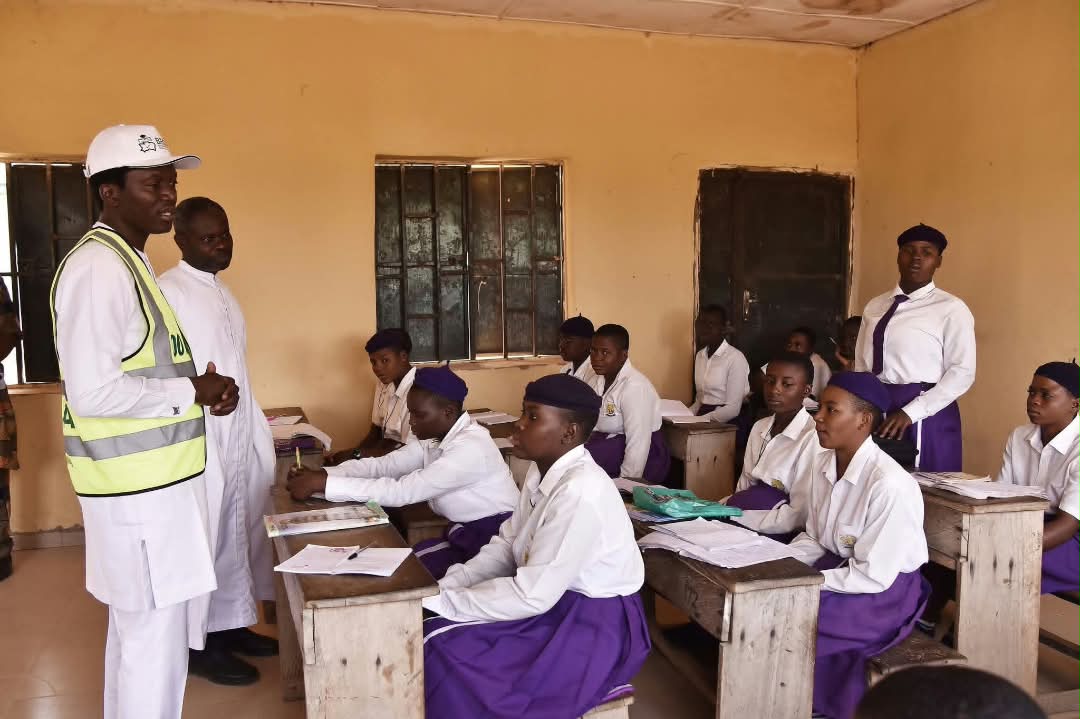
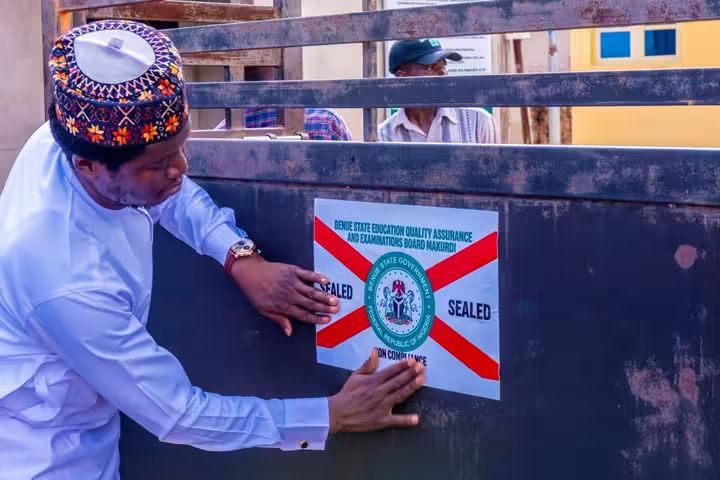
The bureau also intensified its campaign against unapproved and substandard schools, shutting down over 200 schools in Gboko and 48 in Katsina-Ala, as well as sealing an unregistered school operating in an unfinished hotel building in Makurdi. These efforts formed part of a broader exercise targeting approximately 2,460 unapproved, unregistered, or substandard schools across Benue State that could not provide quality education as prescribed by the National Policy on Education.
The
proprietors of these schools had been given a grace period to regularise their
records. While many complied and had their names removed from the list of
unapproved schools, others remained adamant and refused to obtain government
approval, eventually leading to the closure of their schools.
The
interventions underscored the importance of effective regulation in ensuring
that schools operate within established standards and provide safe, suitable
learning environments.
Recognising
the need to integrate school quality assurance with credible examination
administration, Governor Alia initiated the merger of BSEB and BEQA into a
single institution.
Following
the passage of the enabling legislation by the Benue State House of Assembly,
the governor signed the bill establishing the Benue Education Quality Assurance
and Examinations Board (BEQAEB) on 6 November 2025.
The
new board brought the responsibilities of the two former institutions under one
administrative structure, with Dr. Terna Francis appointed as its substantive
Executive Secretary.
The
merger was designed to improve coordination, accountability and efficiency by
bringing school inspection, regulatory enforcement, quality assurance and
examination management under one institution.
Upon
assuming leadership of BEQAEB, Dr. Francis initiated administrative and
operational reforms to improve productivity and restore accountability.
Staff
were redeployed to enhance efficiency, while personnel from the defunct
examinations board were integrated into the new structure. The board also
cleared outstanding salary arrears owed to casual workers, addressing a
longstanding welfare concern that had affected staff morale.
To
improve examination logistics, serviceable vehicles were repaired,
strengthening the transportation of examination materials to schools across
Benue State’s 23 local government areas.
Financial
transparency also received attention through the introduction of automated
registration payments for the BECE and Mock SSCE. The adoption of electronic
and point-of-sale (POS) transactions helped reduce cash handling, minimise
opportunities for revenue leakages and promote greater accountability in the
registration process.
One
of BEQAEB’s notable achievements has been the production of the 2024 and 2025
BECE certificates, which reportedly had not been issued since 2017.
The prolonged delay created difficulties for parents and pupils who needed examination certificates as evidence of educational progression. The renewed production of these documents has therefore helped address a longstanding administrative challenge and restored confidence in an essential component of the education system while providing relief to affected parents and their wards.

The board has also committed to ensuring that certificates are produced and issued annually, helping to prevent a recurrence of the delays experienced in previous years.
In
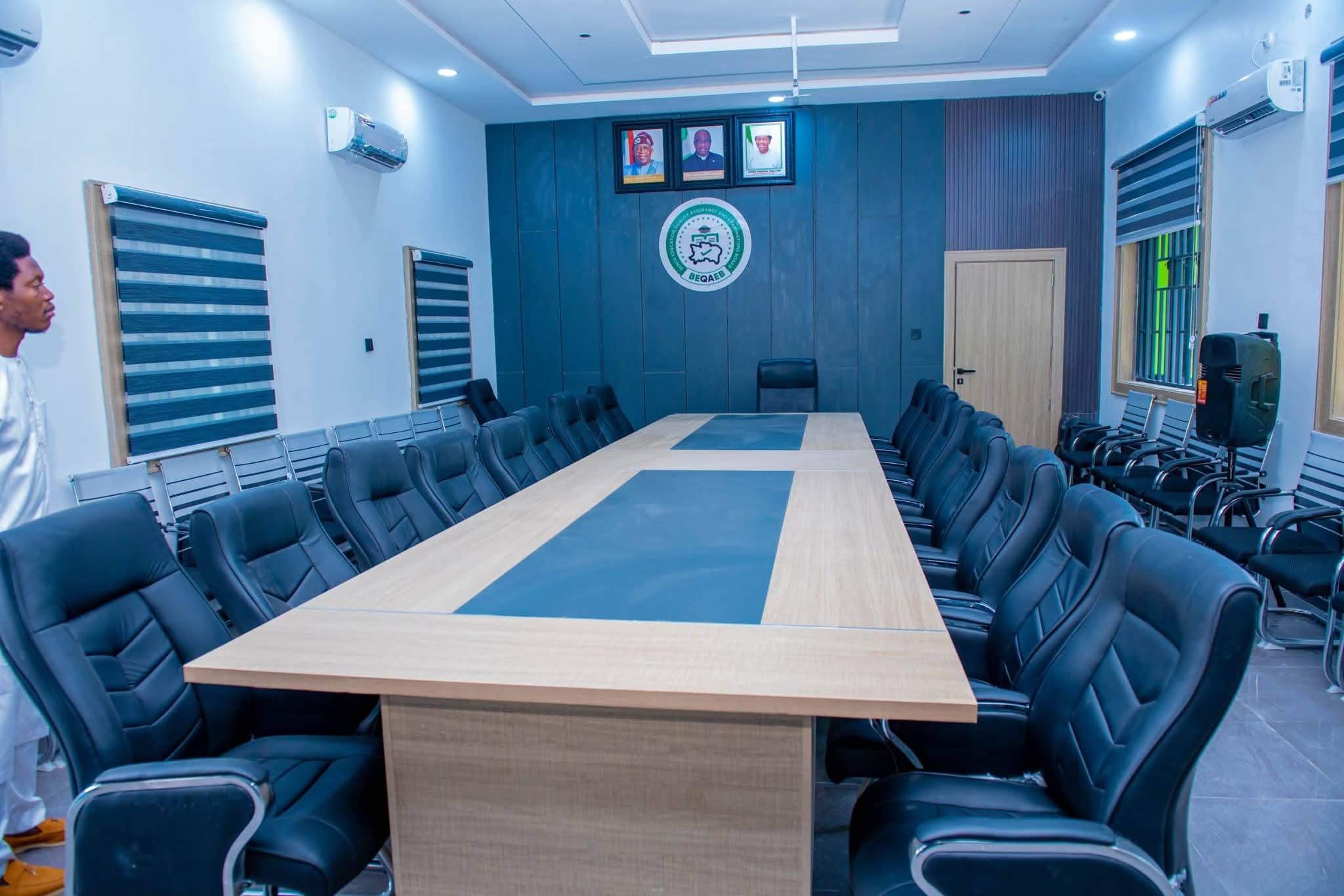
further support of the reforms, a 72-office ultramodern complex was completed
to provide a suitable working environment for BEQAEB.
The
facility is expected to improve coordination among staff and support the
board’s expanding responsibilities, including school inspections, examination
logistics and administrative operations.
The
successful conduct of the BECE and Mock SSCE under the new institutional
arrangement further highlighted the importance of adequate infrastructure and
operational support in delivering effective public services.
BEQAEB’s
responsibilities extend beyond examinations to enforcing government policies
designed to protect learners and reduce the financial burden on parents.
In
line with the government’s textbook reuse policy, the board has sealed two
schools for violating the directive. The action reinforces the administration’s
determination to discourage practices that compel parents to purchase new
textbooks unnecessarily every session or term.
At
a time when many households face economic difficulties, effective
implementation of this policy can help make education more affordable.
Sustained
progress, however, will require consistent monitoring, fair enforcement, public
awareness and cooperation from school proprietors. Through these efforts,
BEQAEB can help ensure that the pursuit of quality education does not impose
unnecessary financial hardship on families.
The
establishment of BEQAEB represents an important milestone in Governor Alia’s
efforts to reposition education in Benue State. From recruiting teachers and
rehabilitating public schools to introducing free and compulsory basic
education and increasing budgetary commitment, the administration has pursued a
broad programme of educational reforms.
BEQAEB
occupies a strategic position within this agenda because it focuses on the
quality, regulation and credibility of the education system. While teachers,
classrooms and learning materials are essential, sustainable improvement also
requires effective oversight, reliable examinations, transparent financial
processes and consistent enforcement of standards.
Under
Dr. Francis, the board has begun addressing longstanding challenges through
staff restructuring, improved examination logistics, electronic registration
payments, the production of outstanding certificates and enforcement of
government policies.
With
sustained political commitment, professional leadership and effective
oversight, BEQAEB has the potential to become a major pillar of Governor Alia’s
educational legacy, helping to build a system in which standards are upheld,
parents are protected, examinations are credible and every child has a fair
opportunity to succeed.
Jeffrey Adzam
Information Officer
BEQAEB




Comments 0
Join the discussion on this news article. All comments are moderated before appearing.
No comments yet
Be the first to share your thoughts on this story!
Write the first commentLeave a Comment
Your email address will never be published or shared. Required fields are marked *