Benue State under Governor Hyacinth Alia: A Chronicle of Nearly Four Years of Governance, Infrastructure Renewal and Economic Repositioning
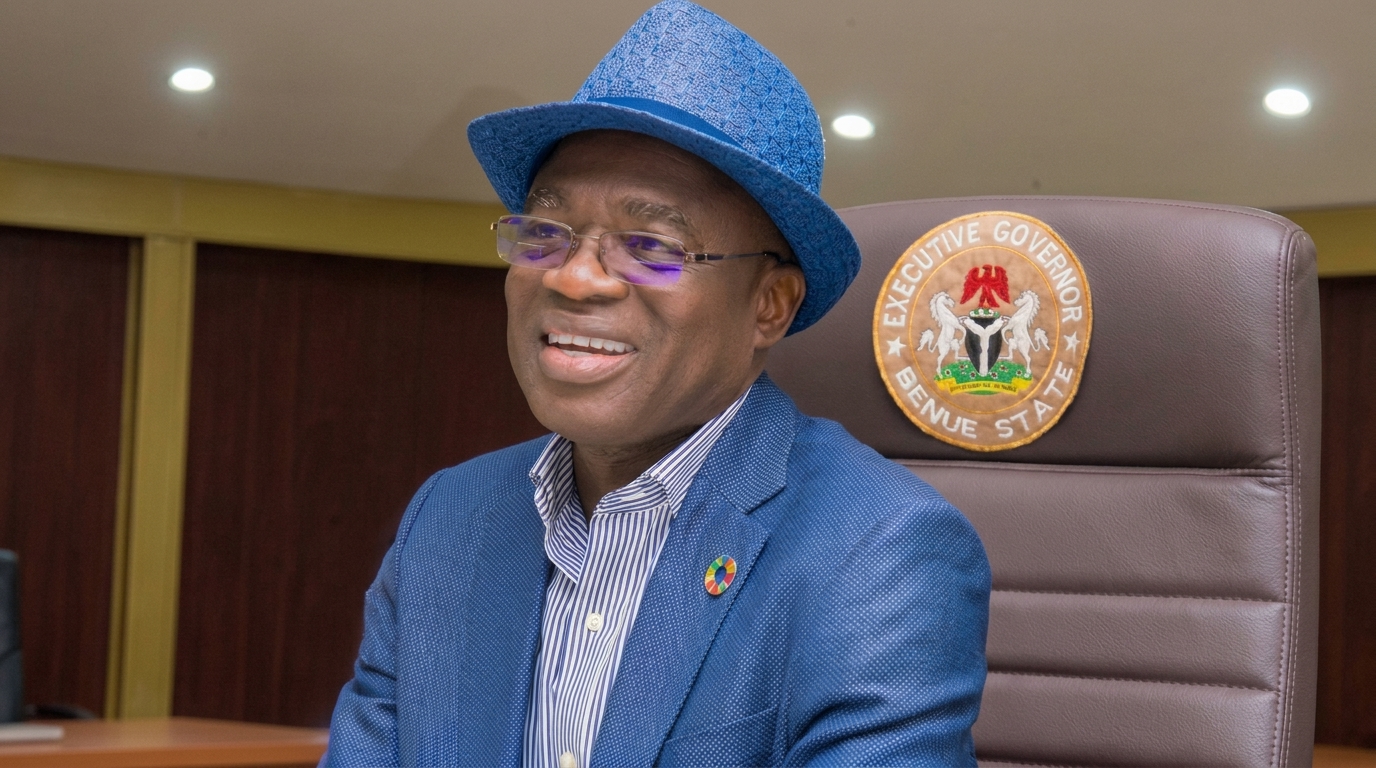
Since assuming office on May 29, 2023, the Executive Governor of Benue State, His Excellency, Rev. Fr. Dr. Hyacinth Iormem Alia, has pursued an agenda focused on infrastructure renewal, economic recovery, workers’ welfare, agricultural development, improved public services and the restoration of confidence in government.
His administration
inherited a state facing significant developmental challenges, including
insecurity, deteriorating public infrastructure, accumulated salary and pension
obligations, unemployment and pressure on public finances. The administration
subsequently embarked on a programme of road construction, institutional
reforms, social-sector interventions and efforts to revive dormant economic
assets.
As the administration
approaches its fourth year, its record presents an opportunity to examine the
projects undertaken, the policies introduced, the progress recorded and the
challenges that remain. A balanced assessment must consider both the
administration’s reported achievements and the extent to which these
interventions are translating into lasting improvements in the lives of Benue
people.
1.
Infrastructure Development: Rebuilding Roads, Cities and Rural Communities
Infrastructure has been
one of the most visible areas of intervention under Governor Alia. At his
third-anniversary address in May 2026, the governor reported that more than 50
intra-city roads had been completed, with over 50 additional road projects
under construction. He also reported the construction of approximately 370 kilometres
of rural roads, alongside the completion of major interchange projects in
Makurdi and Gboko.
The Makurdi and Gboko
interchanges constitute important interventions in urban transportation
infrastructure. Their significance lies in their potential to improve traffic
movement, reduce delays and support commercial activities in major population
centres.
The administration has
also undertaken drainage projects to address flooding and improve urban
environmental management. A four-kilometre drainage canal extending from Achusa
through Idye to Wurukum in Makurdi, together with additional drainage systems,
was among the projects highlighted in the governor’s third-anniversary account.
In rural communities, road construction and rehabilitation have been pursued through state interventions and the Rural Access and Agricultural Marketing Project (RAAMP). In July 2026, RAAMP’s state project coordinator reported that more than 140 bridges and culverts had been delivered through the programme, improving connectivity between farming communities and markets.
The ongoing Awajir–Oju
Road project, reported in August 2026 as a 52-kilometre intervention, is
another significant example of road infrastructure intended to strengthen
inter-community connectivity and economic activity.
The administration has
also continued the “Light Up Makurdi” initiative, which uses solar-powered
streetlighting to improve visibility and support commercial activity after
dark.
These projects indicate
a broad infrastructure programme encompassing urban roads, rural access,
traffic management, drainage and public lighting. Their long-term value will
depend on construction quality, equitable geographical distribution,
maintenance and demonstrable reductions in transportation costs and travel time.
2.
Economic Development: Reviving Industry and Expanding Productive Capacity
Benue’s economy depends
substantially on agriculture, trade, small businesses and the movement of
agricultural produce. Consequently, the administration’s economic strategy has
included efforts to reconnect infrastructure development with productive
activity.
One major policy
direction has been the proposed or ongoing revival of state-linked industrial
assets, including Taraku Mills and the Benue Breweries industrial enterprise.
In August 2026, the Presidency reported that the rehabilitation of Taraku Mills
was among the economic assets being pursued by the administration to strengthen
industrial production and add value to agricultural commodities.
The administration has
also announced initiatives involving food processing, beverage production and
other manufacturing activities. These include plans associated with a food
complex in Otukpo, a brewery and a fruit-juice processing enterprise.
Such investments are
potentially important because they could create employment, increase demand for
locally produced agricultural commodities, reduce post-harvest losses and
expand the state’s internally generated revenue.
However, announced
factories, projects under construction and operational industrial facilities
must be distinguished. The number of jobs created, investment actually
committed, production capacity achieved and revenue generated should be
established through independently verifiable records.
The administration has
also attributed part of its increased capacity to execute projects and meet
financial obligations to improved federal allocations. In July 2026, Governor
Alia stated that increased fiscal inflows had enabled the government to
undertake development projects while addressing inherited salary and pension
obligations.
The central economic
test is whether increased public revenue and infrastructure investment will
translate into a broader productive economy, sustained employment, improved
household incomes and stronger non-oil revenue generation.
3.
Agriculture: Strengthening Benue’s Food-Producing Capacity
Agriculture remains
central to Benue State’s economic identity and livelihood structure. The
administration has therefore pursued interventions aimed at supporting farmers,
improving access to agricultural inputs and strengthening the movement of
produce to markets.
In its first year, the
government reported the distribution of 100 truckloads of fertiliser to farmers
at subsidised rates. It also reported support for the International Fund for
Agricultural Development’s Value Chain Development Programme in eight local
government areas, with a focus on rice and cassava production.
Other initiatives
included the distribution of tractors and funding through the Agro-Climatic Resilience
in Semi-Arid Landscapes programme, support for improved seeds and seedlings,
and efforts to reactivate the integrated swine-and-crop project at Yandev in
Gboko Local Government Area. These initiatives were outlined in the governor’s
official Democracy Day address of June 12, 2024.
The subsequent emphasis
on rural roads is particularly relevant to agricultural development. Better
roads can reduce the cost of transporting produce, improve access to
agricultural inputs and enable farmers to reach markets more reliably.
The administration’s
longer-term challenge is to move beyond the distribution of farm inputs towards
a comprehensive agricultural transformation programme involving irrigation,
mechanisation, storage, processing, extension services, accessible financing
and dependable markets.
4.
Workers’ Welfare, Salaries and Pensions
The payment of
salaries, pensions and outstanding entitlements has been an important issue in
assessing the administration’s financial management.
At the May 2023 handover, the outgoing administration of Governor Samuel Ortom reported total indebtedness of approximately ₦187.56 billion, comprising loans, bonds, salary and pension arrears and outstanding contractual obligations. This figure represents the outgoing government’s reported position at handover and should not be interpreted as a complete measure of all subsequent financial developments.
Governor Alia
subsequently prioritised the payment of salaries and the settlement of
inherited obligations. In his third-anniversary account, he reported more
consistent salary payments and continuing efforts to address pension arrears.
In July 2026, the
governor also stated that some local government workers had experienced salary
arrears extending to several years before his administration, and that
increased revenue had helped the government clear a substantial portion of
outstanding obligations.
The administration’s
record in this area should be assessed through verified payment schedules, the
amount of arrears cleared, the number of pensioners reached and the regularity
of payments across the state and local government services.
Beyond immediate
payments, sustainable workers’ welfare requires a dependable payroll system,
sound pension administration, realistic budgeting and sufficient revenue to
meet recurrent obligations without compromising capital development.
5.
Education: Investment in Schools, Teachers and Human Capital
Education has been
another important component of the administration’s development agenda.
In its first year, the
government reported paying examination fees for eligible students in public
secondary schools sitting for WAEC, NECO and NABTEB examinations. It also
reported distributing instructional materials, training headteachers and establishing
the Benue State Education Quality Assurance Agency to strengthen monitoring and
standards in schools.
At the tertiary level,
the administration highlighted improvements at the state university and
teaching hospital, including expanded academic programmes and ICT facilities.
By May 2026, Governor
Alia reported that more than 400 school structures had been rehabilitated or
constructed. The administration also recruited 9,700 teachers for the basic
education level, a major intervention aimed at strengthening staffing and
improving teaching and learning in basic education schools across the state.
In addition, the
government is making plans to recruit thousands more teachers for the state’s
secondary school system. The proposed recruitment is expected to address
staffing gaps and strengthen teaching and learning in public secondary schools
across Benue State.
The administration has also pursued the establishment and development of the University of Agriculture, Science and Technology at Ihugh, Vandeikya Local Government Area. The institution is intended to strengthen specialised training and research in agriculture, science and technology. These initiatives address important dimensions of educational development: access, staffing, infrastructure, learning materials and specialised tertiary education.
6.
Healthcare: Expanding Access and Strengthening Medical Services
Healthcare
interventions under the administration have included improvements to
teaching-hospital facilities, support for medical personnel and efforts to
strengthen primary healthcare.
In 2024, the governor
reported an overhaul of facilities at the Benue State University Teaching
Hospital, the recruitment of 500 additional staff and the commencement of full
clinical services at the Muhammadu Buhari Mother and Child Hospital in Makurdi.
The government also
introduced or supported medical training incentives, including a bond scheme
for medical students of Benue origin and allowances for doctors serving through
the National Youth Service Corps.
By May 2026, the
administration reported that more than 500 healthcare personnel had been
recruited and that facilities at the teaching hospital had been upgraded.
These interventions are
relevant to the state’s need for accessible healthcare, particularly in rural
communities and underserved areas. However, the number of facilities renovated,
personnel recruited and services provided should be distinguished from the
actual health outcomes achieved.
A comprehensive
assessment should examine maternal and infant mortality, immunisation coverage,
availability of essential medicines, staffing at primary healthcare centres,
patient waiting times and the affordability of treatment.
7.
Security, Displacement and Community Protection
Security remains one of
the most consequential issues facing Benue State, particularly because attacks
on farming communities have affected livelihoods, displaced residents and
disrupted agricultural production.
The administration has
supported security agencies with vehicles, motorcycles and other operational
logistics. At its third-anniversary address in May 2026, the governor reported
the distribution of 150 Hilux vehicles and more than 600 motorcycles to
security operatives.
The government also
established the Civil Protection Guards and the joint task force known as
“Anyam Nyor”, intended to complement existing security arrangements.
These interventions
demonstrate an emphasis on strengthening the operational capacity of security
personnel. Their effectiveness, however, must be measured against independently
documented changes in attacks, casualties, displacement, response times and the
safe return of internally displaced persons to their communities.
Security is not merely
a law-enforcement concern in Benue; it is also an economic and humanitarian
imperative. Farmers cannot cultivate their land confidently, traders cannot
operate normally and rural development cannot be sustained where communities remain
exposed to violence.
The administration’s
continuing responsibility is therefore to combine security operations with
intelligence-led prevention, community engagement, humanitarian support and
durable solutions for displaced persons.
8.
Digital Transformation, Employment and Public-Sector Reform
The administration has
also highlighted digital skills, information technology and public-sector
modernisation as instruments for economic participation and more efficient
governance. In May 2026, Governor Alia reported that more than 10,000 youths
had received digital-skills training, while 40,000 civil servants were
undergoing training in e-governance and ICT tools.
If sustained and
properly implemented, these programmes could improve access to digital
employment, strengthen public-service delivery and enhance the documentation
and management of government activities.
The administration has
also reported efforts to identify irregularities in government payrolls and
improve public expenditure management. In his 2024 Democracy Day address, the
governor stated that the government had removed ghost workers, ghost schools
and ghost agencies from its payroll and administrative records.
9.
Transportation, Public Utilities and Urban Renewal
The rehabilitation of
Benue Links Transport Company formed part of the administration’s early
interventions. In 2024, the government reported providing 100 new buses,
subsidising transportation costs and upgrading the company’s headquarters. The
initiative was intended to improve passenger transportation and strengthen the
operational capacity of a state-owned enterprise.
Other reported
interventions include improvements to drainage infrastructure, public lighting
and water supply, alongside the reconstruction and renovation of selected government
facilities.
10.
Institutional Relations and Development Planning
The administration has
also emphasised cooperation with the Federal Government and the mobilisation of
external support for state development. In August 2026, the Presidency reported
inspections of federal and state infrastructure projects in Benue, including
the Awajir–Oju Road and interventions along the Benue–Enugu corridor. The
report highlighted the administration’s position that improved federal-state
relations and increased federal allocations had created additional fiscal space
for development.
The government has also
begun developing a 30-year master plan intended to support continuity in
development beyond individual administrations, according to reporting by “The
Nation” in 2026.
11.
A Concise Comparison with Previous Administrations
Benue State’s
development history includes the administrations of George Akume (1999–2007),
Gabriel Suswam (2007–2015), Samuel Ortom (2015–2023) and the current
administration of Hyacinth Alia, which began in May 2023.
Each administration
operated under different economic conditions, federal policies, security
pressures and development priorities. Consequently, a fair comparison should
examine documented records rather than rely on political claims or general
impressions.
The Akume
administration (1999–2007) governed during the early years of Nigeria’s Fourth
Republic. Its record should be assessed through the infrastructure,
institutional development, education, healthcare and public-service reforms
undertaken during that period.
The Suswam
administration (2007–2015) governed during a period that included significant
federal revenue inflows and national infrastructure initiatives. A comparative
assessment should examine its capital projects, fiscal management, agricultural
policies, industrial development and public-service outcomes.
The Ortom
administration (2015–2023) faced persistent security challenges, particularly
attacks on rural communities and their consequences for agriculture and displacement.
It also pursued urban and rural road construction, healthcare infrastructure
and other public projects. Contemporary reporting documented road and
health-sector interventions during the period. The administration’s final
reported debt and arrears position, presented at handover in May 2023, is also
relevant to assessing the fiscal circumstances inherited by its successor.
The Alia administration
(2023–October 2026) has placed considerable emphasis on road construction,
drainage, salary and pension obligations, school rehabilitation, healthcare
staffing, security logistics, digital training and the revival of industrial
assets. Its reported infrastructure programme includes more than 50 completed
intra-city roads, additional ongoing road projects and hundreds of kilometres
of rural roads.
The most defensible distinction at this stage is one of emphasis and reported implementation priorities. Alia’s administration has placed visible attention on urban infrastructure, rural connectivity, the settlement of inherited obligations and industrial revitalisation. Previous administrations also undertook infrastructure and social-sector interventions, although their records must be evaluated against the circumstances and resources available during their respective tenures.
12.
Outstanding Challenges and the Road Ahead
Despite the
interventions reported so far, Benue State continues to face significant
developmental challenges. Insecurity and displacement remain central concerns,
while the sustainability of industrial revival, the quality of public services,
employment creation and the maintenance of infrastructure require sustained
attention.
The administration must
also demonstrate that increased public revenue is translating into measurable
improvements in living standards. Road projects should be completed to
specification; industrial enterprises should progress from announcements and
rehabilitation to sustained production; and improvements in education and
healthcare should be reflected in outcomes experienced by ordinary citizens.
Fiscal transparency
will be particularly important. Regular publication of project costs, contract
awards, implementation timelines, independent audit findings and measurable
results would enable citizens to assess progress more confidently.
The remaining period
before the fourth anniversary provides an opportunity to consolidate completed
projects, accelerate ongoing work and address areas where outcomes have fallen
short of expectations.
Nearly four years into
Governor Hyacinth Iormem Alia’s administration, Benue State has witnessed a
programme of infrastructure construction, rural connectivity projects,
agricultural support, public-sector initiatives and efforts to meet inherited
financial obligations.
The administration’s
reported achievements include completed urban roads, ongoing construction
projects, rural bridges and culverts, drainage interventions, school
rehabilitation, recruitment of teachers and healthcare personnel, security
logistics and renewed attention to state-linked industrial assets.
These developments
provide a basis for evaluating the direction of the administration. They do
not, by themselves, settle the broader question of its long-term impact. That
assessment must also consider the quality of completed projects, the durability
of reforms, the security of rural communities, the creation of sustainable
employment and the actual improvement of living conditions.
Compared with its predecessors, the Alia administration has articulated a development programme that places visible emphasis on infrastructure renewal, workers’ welfare, rural access and economic revitalisation. A definitive historical judgment, however, should rest on transparent, comparable and independently verifiable evidence.
Ultimately, the enduring measure of any administration will not be the number of projects announced or commissioned, but the extent to which its policies build a safer, more productive, better educated and economically resilient Benue State.
Comments 0
Join the discussion on this news article. All comments are moderated before appearing.
No comments yet
Be the first to share your thoughts on this story!
Write the first commentLeave a Comment
Your email address will never be published or shared. Required fields are marked *