GOVERNOR ALIA’S INTERVENTION REPOSITIONS NG-CARES, EMPOWERS OVER 88,000 BENUE RESIDENTS
GOVERNOR ALIA’S INTERVENTION
REPOSITIONS NG-CARES, EMPOWERS OVER 88,000 BENUE RESIDENTS
With
88,109 direct beneficiaries reached by the close of the programme in October
2025, the Benue State component of the World Bank-supported NG-CARES initiative
has delivered social transfers, livelihood grants, agricultural assistance and
community infrastructure interventions, following renewed government support
under Governor Hyacinth Iormem Alia.
The
administration of His Excellency, the Executive Governor of Benue State, Rev.
Fr. Dr. Hyacinth Iormem Alia, has strengthened the implementation of the
Nigeria Community Action for Resilience and Economic Stimulus (NG-CARES)
Programme in the state through financial support, the settlement of outstanding
beneficiary obligations and continued commitment to interventions targeting
poor and vulnerable residents.
Designed
to cushion the socioeconomic effects of the COVID-19 pandemic and support
economic recovery, the programme has provided assistance to households,
farmers, community groups and Micro and Small Enterprises (MSEs) across Benue
State.
By
the close of the parent programme in October 2025, the Benue State component,
known as BN-CARES, had reached 88,109 direct beneficiaries, representing
approximately 90 per cent of its revised target of 97,917 beneficiaries.
The
results reflect the continued implementation of social protection, livelihood
support, food security and community development interventions under the
state’s existing delivery structures, with the administration of Governor Alia
providing a renewed push after the programme encountered significant financial
constraints in its earlier stages.
Governor Alia’s intervention:
Restoring momentum
Although
implementation of BN-CARES commenced in 2021, the programme initially operated
under significant financial constraints and required an advance of ₦1.1 billion
to support implementation.
Following
his assumption of office on May 29, 2023, Governor Alia’s administration
intervened by providing counterpart support amounting to ₦1.15 billion,
settling outstanding beneficiary obligations and supporting the continuation of
programme activities.
The
intervention helped address implementation challenges and contributed to
improved performance in subsequent implementation rounds.
The
importance of the state government’s support lies in the programme’s design.
NG-CARES operates through a results-based financing model under which funds are
disbursed against agreed results that must be independently verified. Sustained
implementation therefore requires both the delivery of interventions to
eligible beneficiaries and the institutional capacity to document and verify
the results.
By
supporting the programme’s continuation, the Alia administration helped
maintain an important framework for delivering assistance to vulnerable
populations and strengthening economic resilience across the state.
The
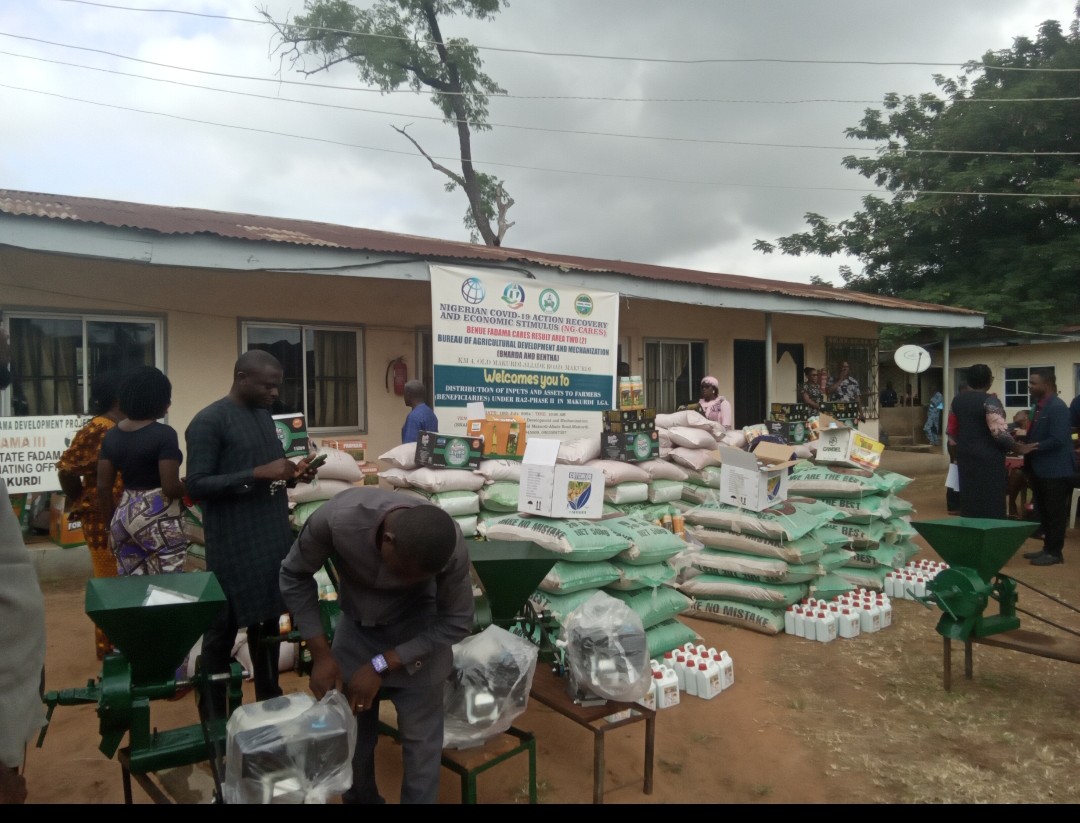
programme’s contribution has extended to household welfare, agricultural
productivity, community infrastructure and the recovery of small businesses,
linking government-supported interventions with the everyday economic needs of
residents.
More than 60,000 residents reached
by January 2025
The
impact of the programme became increasingly visible during the Alia
administration.
By
January 2025, more than 60,000 residents across Benue State’s 23 local
government areas had reportedly been empowered through grants totalling ₦4.9
billion.
The
support focused on livelihood development, small businesses and vulnerable
groups, including persons living with disabilities.
For
beneficiaries, such interventions provide support intended to strengthen
livelihoods, sustain productive activities and improve the capacity of
households and enterprises to withstand economic pressures.
The
programme’s reach across all 23 local government areas also reflects its
statewide coverage, extending support beyond major urban centres to communities
where access to economic opportunities and basic services remains essential to
household wellbeing.
The
January 2025 figures represent an important milestone within the wider
implementation period, which continued until the close of the parent programme
in October 2025.
How NG-CARES supports households,
farmers and businesses
The
Benue State programme was established as the state component of the World
Bank-supported NG-CARES initiative, which was designed to expand access to
livelihood support, food security services and grants for poor and vulnerable
households and firms affected by the economic crisis associated with the
COVID-19 pandemic. Its interventions were organised around three principal
results areas.
1. Social transfers, livelihood
support and community services
This
component supports poor and vulnerable households through social transfers,
livelihood assistance and community-level interventions.
The
activities are intended to improve household welfare, strengthen resilience and
expand access to basic services through community micro-projects and other
targeted support.
Such
assistance is particularly important to households facing economic hardship, as
it provides a framework for addressing immediate needs while supporting efforts
towards more sustainable livelihoods.
2. Food security and agricultural
support
Agriculture
remains central to the livelihoods of many Benue residents. Support to farmers
and food production systems is therefore an important part of the programme.
Through
agricultural inputs, productive assets and related assistance, BN-CARES has
supported interventions aimed at strengthening food security, improving
agricultural productivity and helping farming households sustain their
productive activities.
The
programme also recognises the importance of food supply chains, through which
agricultural products move from producers to markets and consumers.
3. Recovery of Micro and Small
Enterprises
Micro
and Small Enterprises play an important role in employment, household income
and local economic activity.
NG-CARES
provides a framework for supporting eligible enterprises through grants and
other interventions designed to facilitate recovery and strengthen business
capacity.
In
Benue State, the programme’s support to small businesses forms part of the
broader effort to improve economic resilience and create conditions for
enterprises to continue operating despite financial challenges.
Together,
the three results areas connect social protection with productive activity,
recognising that household welfare, food security and enterprise recovery are
closely related.
₦7.87 billion released for programme
implementation
Between
2021 and 2025, a total of ₦7.87 billion was released to the Delivery Platforms
and the State CARES Coordinating Unit (SCCU) for programme implementation.
Of
this amount, approximately ₦5.34 billion, representing 67.9 per cent, was
disbursed directly to beneficiaries as grants and programme benefits.
The
remaining ₦2.53 billion, representing 32.1 per cent, supported programme
delivery and related activities, including supervision, monitoring,
verification, office and ICT equipment, a vehicle for Result Area 3 and
operational requirements.
Result
Area 1 received the largest share of programme resources, reflecting the scale
of social protection interventions delivered under that component.
The
figures demonstrate the financial scale of the programme and the resources
deployed through its implementation structures over the five-year period.
They
also underline the importance of accountability, beneficiary verification and
effective monitoring in ensuring that programme resources reach eligible
recipients and that reported results can be independently substantiated.
Verified results and financing
challenges
Under
the World Bank’s Programme-for-Results financing approach, programme
performance is assessed against agreed Disbursement Linked Indicators (DLIs).
Payments are tied to results achieved and independently verified rather than
being based solely on expenditure incurred.
Across
four Independent Verification Agent (IVA) assessment rounds, Benue State
recorded cumulative verified earnings exceeding US$18.25 million.
However,
actual reimbursements received by the state were significantly lower than the
cumulative verified earnings. The difference was attributed to the recovery of
the initial advance, programme restructuring and the limited resources
remaining in the World Bank financing pool during the final implementation
phase.
Despite
these constraints, Benue State improved its implementation performance and
recorded its highest reimbursement during the third IVA cycle.
The
experience illustrates both the opportunities and challenges associated with
results-based financing. While the model places emphasis on measurable outcomes
and independent verification, the actual funds received by a state can also be
affected by financing arrangements and the resources available within the
programme.
For
Benue, the implementation experience provides lessons for strengthening
financial planning, institutional coordination, beneficiary documentation and
performance monitoring in subsequent interventions.
State institutions drive implementation
The
programme is implemented through existing government institutions designated as
Delivery Platforms, coordinated by the State CARES Coordinating Unit and
overseen by the State CARES Steering Committee.
This
institutional arrangement enables the programme to work through established
structures with responsibilities for planning, implementation, monitoring,
financial management and accountability.
The
State CARES Steering Committee provides policy guidance and oversight, while
the SCCU coordinates implementation and works with the Delivery Platforms to
monitor performance and support the achievement of programme targets.
The
current SCCU management team comprises Mrs Jacyntha Tor-Wombo who is the state
Coordinator, James Ayoosu — Monitoring and Evaluation Lead, Francisca Iorliam —
Planning Lead, Bridget Oglegba — Fraud and Corruption Lead, Kuma Benjamin
Abunde — Accountant. The team's responsibilities include coordination,
planning, monitoring, financial management and oversight functions necessary to
support implementation and accountability.
The
institutional framework is particularly important under a results-based
programme, where performance must be documented and independently verified
before corresponding disbursements can be made.
A foundation for NG-CARES 2.0
The
close of the parent BN-CARES Programme in October 2025 marked the end of one
implementation phase, but the experience gained provides a foundation for the
NG-CARES Additional Financing Programme, also referred to as NG-CARES 2.0.
The
earlier programme demonstrated the importance of sustained government
commitment, reliable implementation structures, beneficiary verification and
coordination among the institutions responsible for delivering support.
It
also showed the value of linking social protection with agricultural
productivity, community infrastructure and small-business recovery.
For
the Alia administration, the next phase presents an opportunity to build on
lessons from the parent programme, strengthen implementation capacity and
improve the delivery of interventions to eligible households, farmers and
enterprises.
Continued
attention to transparency, accurate beneficiary records, effective monitoring
and timely implementation will be important to ensuring that future support translates
into measurable benefits for the people of Benue State.
Conclusion: Putting vulnerable
residents at the centre of development
The
BN-CARES experience demonstrates how a coordinated social protection and
economic recovery programme can provide support across several areas of
community life.
From
grants to vulnerable households and small businesses to agricultural
assistance, community micro-projects and livelihood support, the programme has
contributed to efforts aimed at strengthening resilience and improving economic
opportunities across Benue State.
Its
reported reach of 88,109 direct beneficiaries by October 2025, together with
₦7.87 billion released for implementation between 2021 and 2025, provides a
measure of the scale of the intervention.
The
financial support and renewed implementation commitment provided by Governor
Hyacinth Iormem Alia’s administration were important in sustaining the
programme after its initial challenges. The work of the SCCU and the Delivery
Platforms also remains central to translating policy support into assistance
for beneficiaries.
Ultimately,
the value of NG-CARES lies not only in the funds released or the number of
people reached, but in its contribution to stronger household livelihoods,
improved food security, more resilient communities and the recovery of small
businesses.
As
Benue State advances into the next phase of the programme, the lessons of
BN-CARES provide a basis for strengthening implementation and ensuring that
future interventions continue to address the needs of poor and vulnerable
residents across the state.
Ter Mningem
Information & Communication
Officer,
Benue State SCCU.

Comments 0
Join the discussion on this news article. All comments are moderated before appearing.
No comments yet
Be the first to share your thoughts on this story!
Write the first commentLeave a Comment
Your email address will never be published or shared. Required fields are marked *