Benue–UNICEF Humanitarian Health Outreach reaches Thousands in IDP Camps and Host Communities
Benue–UNICEF Humanitarian Health Outreach reaches Thousands in IDP Camps and Host Communities
The
Benue State Primary Health Care Board (BNSPHCB), with support from UNICEF and
other partners, provided 17,780 medical consultations to internally displaced
persons (IDPs) and vulnerable members of host communities in six local
government areas in the State.
The
Humanitarian Health Outreach (HHO) and Routine Immunization (RI) services, both
funded by UNICEF, were delivered in Agatu, Guma, Gwer West, Kwande, Logo and
Makurdi. The interventions aimed to improve access to essential primary health
care for women, children, adolescents, persons with disabilities and other
vulnerable groups.
BNSPHCB
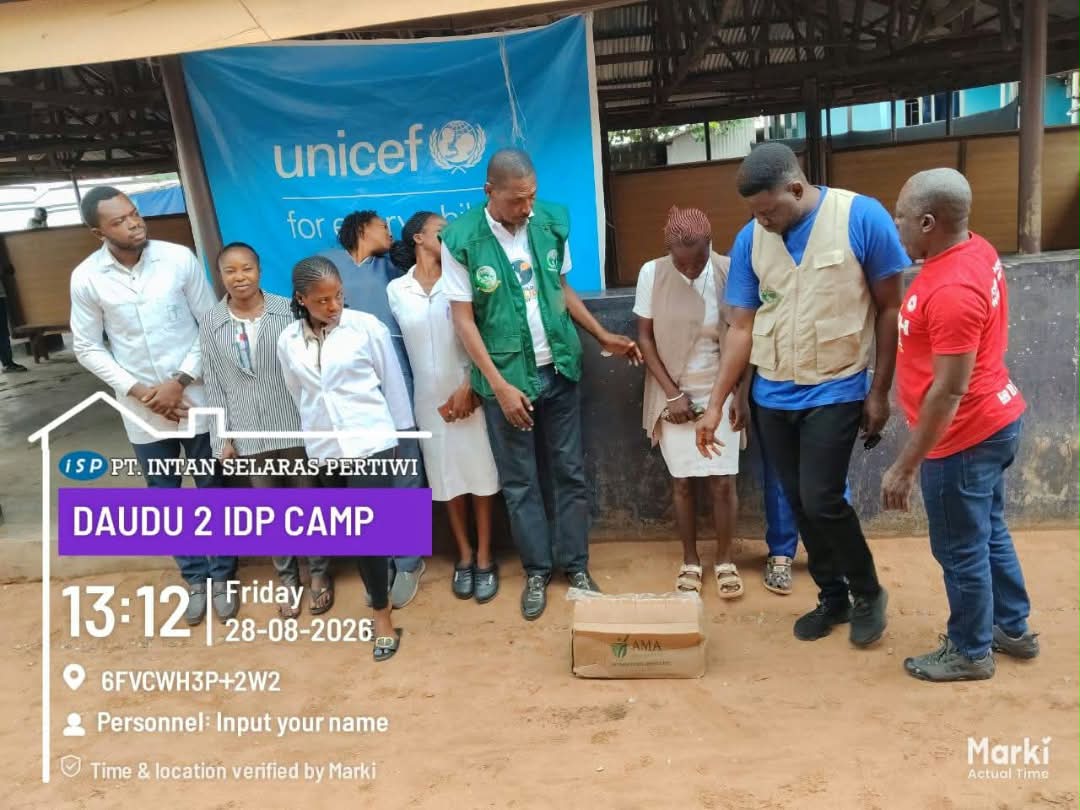
Acting Executive Secretary Pharm. Samuel Terwase Mbatsoron led an unscheduled
supervisory visit to the Daudu 1 and Daudu 2 IDP camps. He said the visit was
intended to assess the quality of care provided by health workers and determine
whether they had the support needed to serve camp residents effectively.
Mbatsoron
said the visit formed part of integrated supportive supervision (ISS), which
aims to strengthen health services for pregnant women, children, vulnerable
populations and underserved communities.
In
an interview, he commended UNICEF for its continued support for the state’s
humanitarian health response. He said UNICEF had consistently supported
services in designated IDP camps across the state since December 2023.
According
to Mbatsoron, the interventions have helped curb disease outbreaks, increase
herd immunity in the camps and improve the health of vulnerable populations. He
added that UNICEF currently engages about 80 staff across the camps.
However,
Mbatsoron expressed concern about shortages of medicines in IDP camps, which he
attributed to donor fatigue and declining resources.
Technical
Supervisor Dr. Austin Adanu said the intervention was delivered by
UNICEF-supported temporary staff, including medical officers, nurses, midwives,
community health extension workers (CHEWs), laboratory and pharmacy
technicians, a psychologist, data assistants, clinic assistants and cleaners.
Adanu
said the programme recorded 61 consultations involving persons with
disabilities, reflecting its focus on equitable and inclusive service delivery.
Maternal
health was a key component of the outreach. Between May and September 2026, the
programme recorded 2,961 antenatal care (ANC) contacts and 441 deliveries.
Adanu
also reported 80 referrals and 167 laboratory tests. He said that although many
cases were managed at the outreach level, referral documentation,
counter-referral and laboratory diagnostic capacity needed to be strengthened.
The
routine immunisation component targeted children at risk of missing
vaccinations because of displacement and mobility. A total of 8,376
vaccinations were recorded.
During
the period, teams administered 881 BCG doses, 809 OPV0 doses and 800 hepatitis
B birth doses. In the primary series, 1,113 children received the third dose of
the pentavalent vaccine, while 1,127 received OPV1 and 1,049 received OPV3.
Adanu
said 1,336 children received measles vaccinations, describing the result as
significant in densely populated IDP settings where measles can spread readily.
The
technical supervisor noted considerable variation in results across locations.
PHC Anyiase in Kwande recorded high outputs for several antigens, while Naka
IDP Camp in Gwer West recorded low routine immunisation output. He said the
difference called for a targeted review of population movement, service
interruptions, vaccine availability and reporting gaps.
Adanu
said the combined HHO and RI strategy provided an important safety net for
vulnerable populations and showed substantial demand for integrated services,
including care beyond treatment of illness.
He
recommended systematically linking outreach services with existing primary
health care facilities and Local Government Health Authorities; maintaining
supplies of essential medicines and vaccines; updating immunisation line lists
and tracking defaulters; improving referral follow-up; and strengthening
engagement with IDP leaders, women’s groups and youth groups.
UNICEF currently supports health outreach and immunisation in IDP camps across Benue State, including Abagena, Ukpiam and Ortese. Beneficiaries said they were satisfied with the quality of care received. They commended UNICEF’s humanitarian health outreach and appealed to the state government to build on the support by procuring medicines and sustaining health services in camps and host communities.

Comments 0
Join the discussion on this news article. All comments are moderated before appearing.
No comments yet
Be the first to share your thoughts on this story!
Write the first commentLeave a Comment
Your email address will never be published or shared. Required fields are marked *